JOIN Details
Our Newsletter
We're thrilled that you're interested in staying
up-to-date with all the latest news


The Trump public charge rule 2026 could affect some people applying for lawful permanent residence (a public charge green card). The Trump administration has announced plans to bring back a stricter version of the public charge rule, a policy that could affect some people applying for lawful permanent residence (a green card).
If finalized and implemented, immigration officers would once again consider a broader range of green card public benefits when deciding whether an applicant is likely to become a “public charge.”
This announcement has caused understandable concern among immigrants and their families. However, it is important to understand exactly what the proposed rule says—and what it does not say.
The public charge ground of inadmissibility is not new.
Federal public charge immigration law has long required immigration officers to determine whether certain applicants for permanent residence are likely to become primarily dependent on the government for support.
The Immigration and Nationality Act requires officers to consider multiple factors when making that determination.
These include:
The proposed rule changes how some of these factors may be evaluated.

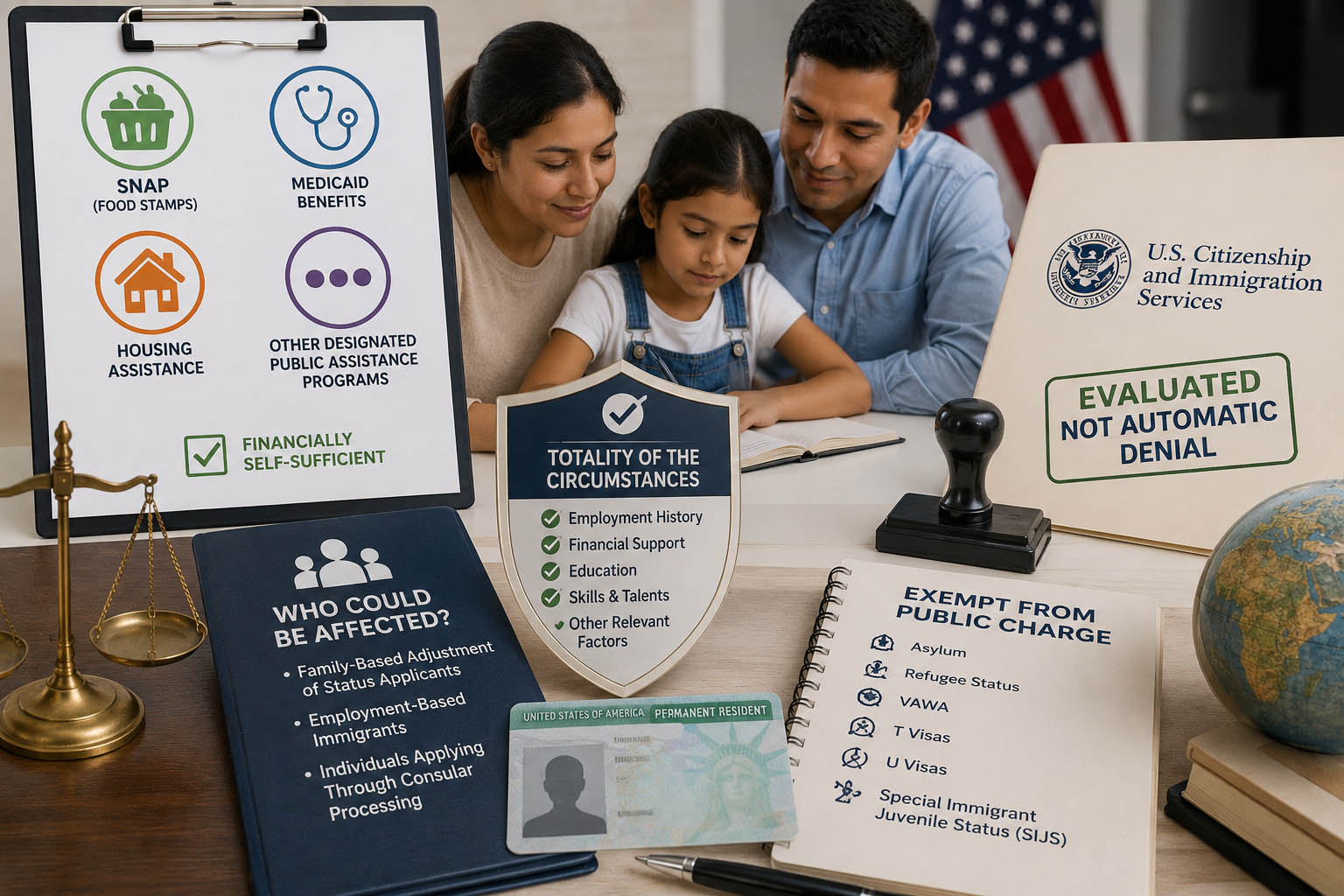
The proposed USCIS public charge rule would allow USCIS to consider a broader range of public assistance programs when evaluating some green card applicants.
Programs discussed in the proposal include:
The proposal reflects the administration’s position that immigrants seeking permanent residence should generally be financially self-sufficient.
No.
This is one of the biggest misconceptions.
Receiving public benefits does not automatically result in a green card denial.
Instead, USCIS evaluates the totality of the circumstances.
That means officers look at the applicant’s entire situation, including positive and negative factors.
A strong employment history, financial support from family, education, skills, and other evidence may all be relevant.
Each case is unique.
The proposed rule could affect certain individuals applying for permanent residence where the public charge ground applies.
Examples may include some:
Each immigration category has different legal requirements.
Many humanitarian immigration programs are not subject to the public charge ground.
Examples include many applicants for:
These humanitarian protections were created by Congress with different eligibility requirements.
According to the announcement, the rule is scheduled to become effective on September 18, unless legal challenges or other developments change the implementation.
Because immigration policies frequently face court challenges, applicants should continue monitoring official guidance and consult qualified legal counsel regarding their specific circumstances.
If you are planning to apply for a green card:
Immigration law continues to change rapidly.
At ST Law Office, PLLC, we help immigrants understand how changing immigration policies—including the Trump public charge rule 2026—affect their individual cases.
Whether you are applying through a family member, employment, or another pathway, our team can evaluate your eligibility and help you prepare the strongest application possible.
Schedule a consultation today to discuss your immigration options.