JOIN Details
Our Newsletter
We're thrilled that you're interested in staying
up-to-date with all the latest news


If you are applying for a green card without leaving the United States, a major new USCIS policy could significantly affect your case.
On May 21, 2026, U.S. Citizenship and Immigration Services (USCIS) issued a policy memorandum that changes how immigration officers evaluate Adjustment of Status (Form I-485) applications.
For decades, applicants who met the legal requirements generally expected USCIS to approve their adjustment of status unless a specific legal ground for denial applied.
The new policy shifts that approach.
Now, even applicants who qualify under the immigration laws may still have to persuade USCIS that they deserve to receive permanent residence inside the United States.
This represents one of the most significant policy changes affecting adjustment of status in years.
If you have a pending green card application or plan to file one soon, understanding this policy is essential.

Adjustment of Status (AOS) is the process that allows someone already inside the United States to become a lawful permanent resident without traveling abroad for an immigrant visa interview.
Instead of leaving the country, eligible applicants file:
Adjustment of Status is commonly used for:
For many families, Adjustment of Status has long been the safest and fastest route to permanent residence.
The biggest change is that USCIS is emphasizing that Adjustment of Status is a discretionary benefit.
That means:
Meeting every legal requirement may no longer be enough.
USCIS officers are now instructed to determine whether applicants deserve to receive permanent residence inside the United States rather than completing immigrant visa processing through a U.S. embassy or consulate abroad.
In practical terms, immigration officers now have broader authority to weigh the total circumstances of each case before making a final decision.
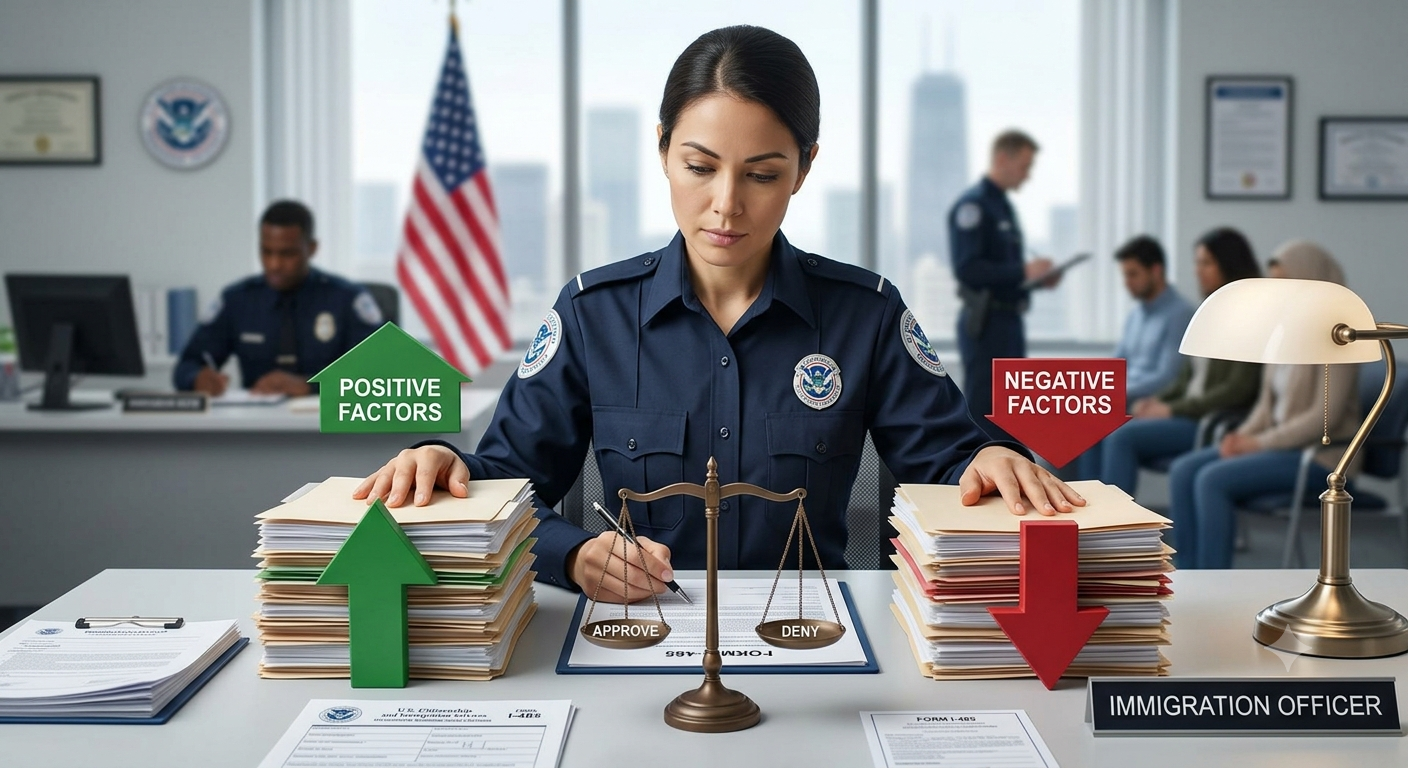
The new policy tells officers to conduct a balancing test.
Instead of simply asking:
“Does this person qualify?”
Officers will also ask:
“Should this person receive Adjustment of Status?”
Positive factors may include:
Negative factors could include:
Even applicants without obvious negative issues may now need stronger evidence demonstrating why USCIS should approve Adjustment of Status.
One of the more surprising aspects of the new memorandum is USCIS’s renewed focus on consular processing.
Consular processing occurs when someone receives an immigrant visa through a U.S. embassy or consulate outside the United States.
Under the new guidance, officers may ask:
Applicants may increasingly need to explain why Adjustment of Status is appropriate under their individual circumstances.
Family-sponsored immigrants represent one of the largest Adjustment of Status categories.
This includes:
Although these applicants may still qualify under existing immigration laws, USCIS officers may now evaluate additional discretionary factors before approving the application.
That means stronger documentation may become even more important.
Employment-based Adjustment of Status applicants are also covered.
These include workers sponsored through:
USCIS specifically states that officers may consider how an applicant’s employment benefits the United States.
Applicants may benefit from presenting evidence of:
The memorandum specifically discusses dual intent visas.
These include:
Dual intent means someone may legally hold a temporary visa while simultaneously seeking permanent residence.
However, USCIS makes clear that dual intent alone does not guarantee approval.
Applicants must still satisfy the new discretionary analysis.
Who Is NOT Affected?
Certain immigration categories remain largely exempt because Congress made Adjustment of Status mandatory if statutory requirements are met.
These include:
These applicants generally should not be subject to the expanded discretionary review outlined in the memorandum.

Potentially.
The policy does not automatically increase denials.
However, it gives immigration officers greater discretion when evaluating applications.
That means applicants who previously may have received straightforward approvals could now receive:
Each case will depend on its individual facts.
How Can Applicants Strengthen Their Case?
Although every case is different, applicants may wish to strengthen evidence demonstrating positive discretionary factors.
Helpful documentation may include:
Working with an experienced immigration attorney may become increasingly important under this evolving policy.
Will This Policy Be Challenged?
Possibly.
Many immigration attorneys and advocacy organizations have raised questions about the legal basis for the new policy.
Future litigation could affect how USCIS applies these discretionary standards.
Additional guidance from USCIS is also expected.
Applicants should monitor developments because implementation may continue to evolve over the coming months.
Does this mean my green card will automatically be denied?
No.
USCIS has not announced that Adjustment of Status applications will be denied automatically. However, officers now have broader discretion when reviewing cases.
Does this affect marriage-based green cards?
Yes.
Marriage-based Adjustment of Status applications generally fall within the scope of the new policy.
Does this affect employment-based green cards?
Yes.
Employment-based Adjustment of Status applicants are also covered.
Is consular processing now required?
No.
Adjustment of Status remains available where authorized by law.
However, officers may now evaluate why Adjustment of Status is appropriate instead of consular processing.
Should I delay filing my Adjustment of Status application?
Not necessarily.
Every case is different.
Speaking with an experienced immigration attorney before filing may help you understand how this policy could affect your circumstances.
Speak With an Experienced Immigration Attorney
The new USCIS policy introduces additional uncertainty into many Adjustment of Status cases.
If you are applying for a green card through marriage, employment, family sponsorship, or another eligible category, careful preparation is more important than ever.
At ST Law Office, we help immigrants nationwide navigate complex immigration laws and develop strong, well-documented applications designed to maximize the likelihood of approval.
Schedule a consultation today to discuss your Adjustment of Status case and learn how the new USCIS policy may affect you.