JOIN Details
Our Newsletter
We're thrilled that you're interested in staying
up-to-date with all the latest news


President Trump’s administration has moved in days to tighten or halt nearly every pathway into the United States, citing national security after the shooting of two National Guard members in Washington, D.C. The biggest immediate shift: USCIS has paused all immigration applications for nationals of the 19 countries currently on Trump’s travel-ban list, effective immediately. That pause covers people already inside the U.S. who are applying for benefits like naturalization, green cards, asylum-related processes, or other immigration relief tied to USCIS adjudication. It also stalls many humanitarian, family and employment cases that would normally continue while applicants wait in the backlog. These 19 countries are:
Afghanistan, Myanmar, Chad, the Republic of Congo, Equatorial Guinea, Eritrea, Haiti, Iran, Libya, Somalia, Sudan and Yemen and added restricted access applied to people from Burundi, Cuba, Laos, Sierra Leone, Togo, Turkmenistan and Venezuela.
At the same time, the administration has frozen USCIS-run asylum decisions nationwide until DHS develops a “maximum vetting” protocol. Vetting now explicitly includes deeper social-media review, expanded biometric checks, and broader requests for information from applicants’ home governments. DHS is also reopening older cases from the Biden era for re-review, and USCIS has announced a “full scale” reexamination of green cards for people from the same 19 countries. Separately, Secretary Noem is urging Trump to expand the travel-ban list to roughly 30–32 countries, though the new list hasn’t been released yet.
Repercussions are serious: longer delays in already years-long queues, increased risk of detentions at check-ins or interviews, and a chilling effect on lawful applicants who fear that “doing it the right way” may still lead to enforcement.
This is a sweeping, fast-moving escalation that reaches far beyond undocumented enforcement—it is reshaping legal immigration in real time.
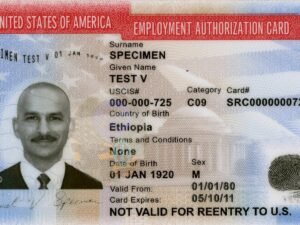
The Trump administration has announced a major rollback in how long immigration work permits (EADs) will last for several groups who are here legally or pursuing legal status. Starting with applications pending or filed on or after December 5, 2025, USCIS will issue EADs valid for no more than 18 months, replacing the current five-year standard.
This shorter validity window applies to:
Because asylum and green card processes often take years, this rule means many families will now have to renew work permits multiple times while waiting. Practically, that brings more fees, more paperwork, more uncertainty, and more risk of gaps in employment authorization if renewals are delayed.
The administration is justifying the change as part of a broader public-safety and vetting push following the recent National Guard shooting in Washington, D.C., allegedly involving an Afghan national whose case moved through the system over multiple years. The work-permit cut is one piece of a wider tightening of legal immigration pathways that has accelerated in recent weeks, including freezes or pauses affecting asylum processing and applications tied to countries on Trump’s travel-ban list.
Even when someone is doing everything “the right way,” the system is being redesigned to make stability harder to hold onto. Shorter EADs don’t just create inconvenience; they can disrupt jobs, driver’s licenses, housing, and a family’s ability to breathe while their case is pending.
Homeland Security Secretary Kristi Noem says she has advised President Trump to issue a much broader “full travel ban” after last week’s National Guard shooting in Washington, D.C. The NBC report says the draft list is about 30 countries and could grow. Trump reposted Noem’s statement and has framed this as part of a larger immigration crackdown following the attack.
This would expand on Trump’s June 4, 2025 proclamation that already set a full travel ban on 12 countries and partial limits on 7 more, effective June 9, 2025.
Separately, the administration cut the refugee cap to 7,500 in October 2025, the lowest modern level, with stated priority for white South Africans.
If the new ban is issued as described, it could block or severely delay:
Even lawful applicants can be denied if their country is newly labeled a “negative factor,” especially under broader security/foreign-policy authority.
Travel bans typically include exceptions for some categories (for example, lawful permanent residents, certain existing visa holders, and narrow national-interest waivers). The administration hasn’t released the final list or waiver rules yet, so we can’t assume who is exempt until we see the list.

A new federal court ruling out of California is a big due-process win for immigrants arrested during ICE sweeps inside the United States. U.S. District Judge Sunshine Sykes ruled that the Trump administration can’t automatically lock up thousands of people without first giving them a chance to ask for bond. The judge certified a nationwide class, meaning the decision doesn’t just help a few plaintiffs — it applies across the country to similarly situated detainees. The ruling targets a July 2025 policy change where DHS began treating long-time U.S. residents picked up in domestic enforcement as “applicants for admission,” placing them under mandatory detention rules that normally apply to people arriving at the border.
This protects non-citizens who were already living in the U.S. when ICE detained them — including people with deep family and work ties — and who, under normal law, are eligible to request release on bond while their cases proceed. Detention has surged nationwide this year, with around 65,000 people in ICE custody as of late September/early October.
It matters because bond hearings are often the difference between fighting a case from home versus from a detention center.
The ruling does not change mandatory-detention rules for:
These groups may still face no-bond detention under existing statutes.
Federal judges across the country have been pushing back on the administration’s attempt to rewrite detention law through policy memos. This order reinforces a basic constitutional line: DHS can’t erase bond rights for people living here by relabeling them as border arrivals.
Even in a harsh enforcement climate, courts are still enforcing the Constitution. This decision is a reminder: due process is not optional — even for DHS.

The Department of Homeland Security (DHS) has issued a Notice of Proposed Rulemaking that would rescind the 2022 public-charge regulation and replace it with a broader, stricter standard for immigrants seeking green cards or admission. It is set to be finalized in early 2026.
Under the draft rule, U.S. Citizenship and Immigration Services (USCIS) would reinstate a much wider definition of “likely to become a public charge,” giving officers increased discretion to consider the totality of circumstances — such as age, health, education, financial resources, past use of public benefits, and even household composition.
The new policy will apply to immigrants applying for admission or seeking adjustment of status (including green card applicants) — including those already in the U.S. on legal pathways. While the 2022 rule had narrowed what benefits counted (largely cash assistance and long-term institutional care), this draft proposes to bring back many non-cash benefits (housing assistance, SNAP, Medicaid, etc.) as negative considerations.
Fortunately, the draft retains statutory exemptions (and earlier law still applies) for certain categories of immigrants who typically do not face public-charge review. These include:
(These exemptions draw from established guidance; the draft rule clarifies it will maintain them.)
If you or your family are navigating immigration now, please take these proactive steps:

In a shocking new development under President Trump’s ongoing immigration crackdown, Immigration and Customs Enforcement (ICE) agents in San Diego have begun detaining immigrants at their green card and citizenship interviews — a move that attorneys call “unprecedented” and “inhumane.”
These arrests are happening at the U.S. Citizenship and Immigration Services (USCIS) office on Front Street, where people appear for their final interviews to become lawful permanent residents or naturalized citizens.
Traditionally, USCIS offices have been considered “safe spaces” for immigrants — areas free from enforcement activity.
This policy shift marks a new phase of interior enforcement, where even those actively complying with immigration law face detention.
Immigration advocates say it destroys public trust and discourages people from coming forward to legalize their status.
Immigration attorneys now warn clients that no location is guaranteed safe from enforcement.
They emphasize:
Advocates fear that families will stop pursuing legal pathways altogether if interviews become traps for enforcement.
ICE is now conducting arrests inside USCIS offices — a dramatic departure from past norms.
Those affected include those with past criminal and immigration violations and past removal orders.
Immigrant communities are now facing heightened fear, even in spaces once seen as secure.
Seek legal counsel before attending any USCIS appointment and to prepare emergency plans in case of unexpected detention.
A new draft policy from the Department of Homeland Security signals a dramatic and deeply concerning shift in how USCIS may handle green cards, asylum cases, and humanitarian parole for immigrants who already live legally inside the United States.
DHS is considering allowing USCIS officers to treat “country-specific factors” as automatic negative marks against applicants who come from any of the 19 countries included in President Trump’s June travel ban.
This is not about people trying to enter the country.
This is about people who are already here, who passed their background checks, cleared multiple levels of vetting, and followed every step of the legal process — including Afghans evacuated by the U.S. military itself in 2021.
San Diego-based advocates warn this policy would function as a “travel ban for people already in the United States,” threatening to strand thousands in permanent limbo or push them into removal proceedings after years of lawful presence.
Many of these families uprooted their lives based on good-faith assurances that the system would eventually give them a path to stability and safety.
This policy would now use their country of origin, not their conduct, not their eligibility, not their contributions — against them.
This proposal doesn’t sit in isolation. It follows a cascade of policy reversals this year:
Together, these policies severely narrow pathways for protection even for allies who risked their lives to support U.S. missions overseas.
The draft DHS rule is the next step in a pattern meant to reshape the immigration system through administrative action.
USCIS could deny cases solely based on nationality.
Thousands could fall into legal limbo with no mechanism to adjust status.
Long-settled families could be placed into removal proceedings.
Afghan allies could face return to persecution despite U.S. promises.
Even those “doing everything the right way” lose predictability and fairness in the system.
For many, this is not just a policy shift — it is an existential threat.
If you are from one of the affected countries or have family members who are:
We continue to see successes. In the past week, we received a marriage greencard within 3 months of applying! We also received an amazing T visa approval! But we’re seeing an uptick in a painful new pattern: ICE detentions happening at moments that used to feel safe—green card and citizenship interviews, biometrics appointments, immigration court, and even routine ICE check-ins. Reports out of places like San Diego describe people being detained during USCIS interviews, including applicants who believed they were at the final step of a legal process. At the same time, court fights and data show a rise in arrests after ICE summons/check-ins and at courthouses, creating fear that compliance itself can trigger detention. It’s becoming a double-edged sword for immigrants.
Why is this happening? The Trump administration is pushing higher arrest numbers and broader domestic enforcement. That pressure shows up in field tactics: “collateral” arrests, targeting people with past removal orders, old visa overstays, prior deportations, or criminal histories—even minor or long-ago issues. Some people are detained not because they committed a new offense, but because prior immigration problems resurface at a touchpoint where the government already has their address and file.
So what are the real pros and cons of applying for legal status right now?
Pros: Legal pathways are still the only way to secure long-term protection, work authorization, and stability for your family. Biometrics, interviews or check-ins can lead to detentions in cases where there is a removal order or criminal record. On the other hand, your attorney can take action to delay or prevent removal using your pending process.
Cons/Risks: If your history includes a prior order, unlawful entry, certain arrests/convictions, or complicated visa timelines, every appointment can carry detention risk. However, not having a pending process also means ICE can deport without delay if you are detained at work or on the street.
What we’re facing—and how we’re rising to the challenge for our clients:
These conditions are challenging, even for experienced counsel like ourselves. The rules shift fast, enforcement is aggressive, and the margin for error is small. But this is exactly where strategy matters. At ST Law Office, we don’t use cookie-cutter approaches. We build individualized case plans that account for your full immigration and criminal history, identify red-flag triggers before your appointment, and put risk-mitigation steps in place—whether that means filing protective motions, strengthening evidence ahead of time, preparing you for questioning, or coordinating a safety plan for interviews and check-ins. And we stay with you through the entire process. You don’t get left alone at the most vulnerable moments.
This is why having counsel matters now more than ever. A prepared attorney can screen your case for detention triggers, attend or coordinate support for key appointments, and act immediately if something goes wrong—through bond planning, motions to reopen, habeas actions, or emergency advocacy. If you don’t yet have a lawyer on your case, consider an emergency/availability retainer so someone who already knows your file can move fast if ICE intervenes. I will say this with all my heart, DO NOT PROCEED IN ANY IMMIGRATION MATTER WITHOUT A LAWYER. These are precarious times which call for all the protections in place to help you succeed.
You deserve to pursue status with eyes open, a plan in place, and a team ready to protect you. If you’re unsure about your risk level, book a consult so we can map your safest path forward.
With compassion and determination,
Sharifa Tharpe, Esq.
NOTE: This article is for general informational purposes only, is not legal advice and does not establish an attorney/client relationship. You must sign a fee and retainer agreement and pay the retainer to establish such a relationship. Any previous results obtained by the law firm or attorney is not a guarantee of the same results in the future. To obtain legal advice, please schedule a consultation with one of our attorneys.